
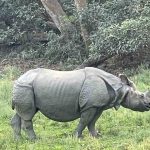
Chitwan National Park, located in the southern part of Nepal in the Terai region, is the first national park of the country. It was established in 1973 to protect wildlife and their natural habitat. In 1984, it was declared a UNESCO World Heritage Site for its rich biodiversity and unique ecosystem. The park covers an area of about 952.63 square kilometers and is home to many rare animals, including the one-horned rhinoceros, Bengal tiger, elephants, leopards, and gharials.
It also has over 500 species of birds, making it a paradise for birdwatchers. Chitwan is famous for jungle safaris, canoeing, and elephant rides, offering visitors a close experience with nature. The park plays a key role in wildlife conservation and eco-tourism in Nepal.
History of Chitwan National Park
Chitwan National Park, located in the Terai region of southern Nepal, is the first national park of the country. Before becoming a national park, the Chitwan area was a dense forest and a malaria-infested region. The local Tharu people lived in this area for centuries and had a unique culture adapted to the forest environment.
In the 1950s and 1960s, the government of Nepal realized that the forests and wildlife of Chitwan were under serious threat due to hunting, deforestation, and human settlement. Many rare animals, including the one-horned rhinoceros and Bengal tiger, were disappearing. To protect these species and their habitat, the government decided to create a national park.
Chitwan National Park was officially established in 1973. It was the first area in Nepal to be protected in this way. The park initially covered 539 square kilometers, but later it was expanded to 952.63 square kilometers to include more forests, rivers, and grasslands.
In 1984, Chitwan National Park was recognized as a UNESCO World Heritage Site. This recognition helped Nepal gain international support for wildlife conservation. The park became famous for its successful protection programs for endangered species such as the one-horned rhinoceros and gharials. Over the years, Chitwan also became an important place for scientific research and eco-tourism.
Today, Chitwan National Park is not only a home for wildlife but also a popular destination for visitors. People come from all over the world to see elephants, rhinos, tigers, and exotic birds. The park’s history shows how Nepal has worked to balance human needs with wildlife conservation, turning a once-threatened forest into a thriving natural sanctuary.

Wildlife of Chitwan National Park
Chitwan National Park is famous for its rich and diverse wildlife. It is home to many rare and endangered animals that attract tourists and researchers from around the world. One of the most famous animals in the park is the one-horned rhinoceros, which is found only in Nepal and India. These rhinos live in the grasslands and riverbanks of Chitwan.
The park is also a habitat for the Bengal tiger, one of the most powerful and beautiful predators in the world. Other large mammals include leopards, elephants, wild boars, swamp deer, sambar deer, and sloth bears. Chitwan’s rivers and wetlands provide a home for gharial and mugger crocodiles, which are rare freshwater reptiles.
Bird lovers will enjoy Chitwan, as it hosts over 500 species of birds, including the crested serpent eagle, kingfisher, Bengal florican, and peacock. Many migratory birds also visit the park during the winter season.
Smaller mammals and reptiles, such as monkeys, porcupines, jackals, snakes, and turtles, are also part of the park’s ecosystem. The combination of forests, grasslands, rivers, and wetlands makes Chitwan an ideal place for wildlife to thrive.
Visitors of Chitwan National Park
Chitwan National Park is one of the most popular tourist destinations in Nepal. Every year, thousands of people from Nepal and other countries visit the park to see its wildlife and natural beauty. Tourists come to enjoy jeep safaris, elephant rides, canoeing, and bird watching.
The park attracts nature lovers, photographers, and researchers who want to study animals, birds, and plants. Families, students, and adventure travelers also visit to experience the jungle and rivers. During the winter season, many migratory birds bring extra attention from bird watchers.
Tourism in Chitwan is important for the local economy, as it creates jobs for guides, drivers, hotels, and restaurants. The park management encourages eco-tourism, which means visitors can enjoy nature while protecting wildlife and the environment.
Chitwan National Park provides a safe and exciting experience for visitors, making it a must-visit place in Nepal for wildlife and adventure lovers.